I recently read Ron Chernow’s biography of Alexander Hamilton and have been fascinated by the parallels between the rise of political factions during Washington’s first two terms and our current divisive political environment. I also regret to say that I am learning that I haven’t always had a full picture of Thomas Jefferson, who I’ve always held in only the highest esteem. In order to distill my thoughts, I am going to attempt to write them down. In this essay, I will do my best to compare and contrast the early Republican Party that formed in Washington’s first two terms as President and the Republican Party of Donald Trump that we have today. I will then attempt to distill my thoughts on a question I’ve been pondering for the last few years about whether I can distill the nature and motives of the Democratic and Republican ideologies down to their most basic principles.
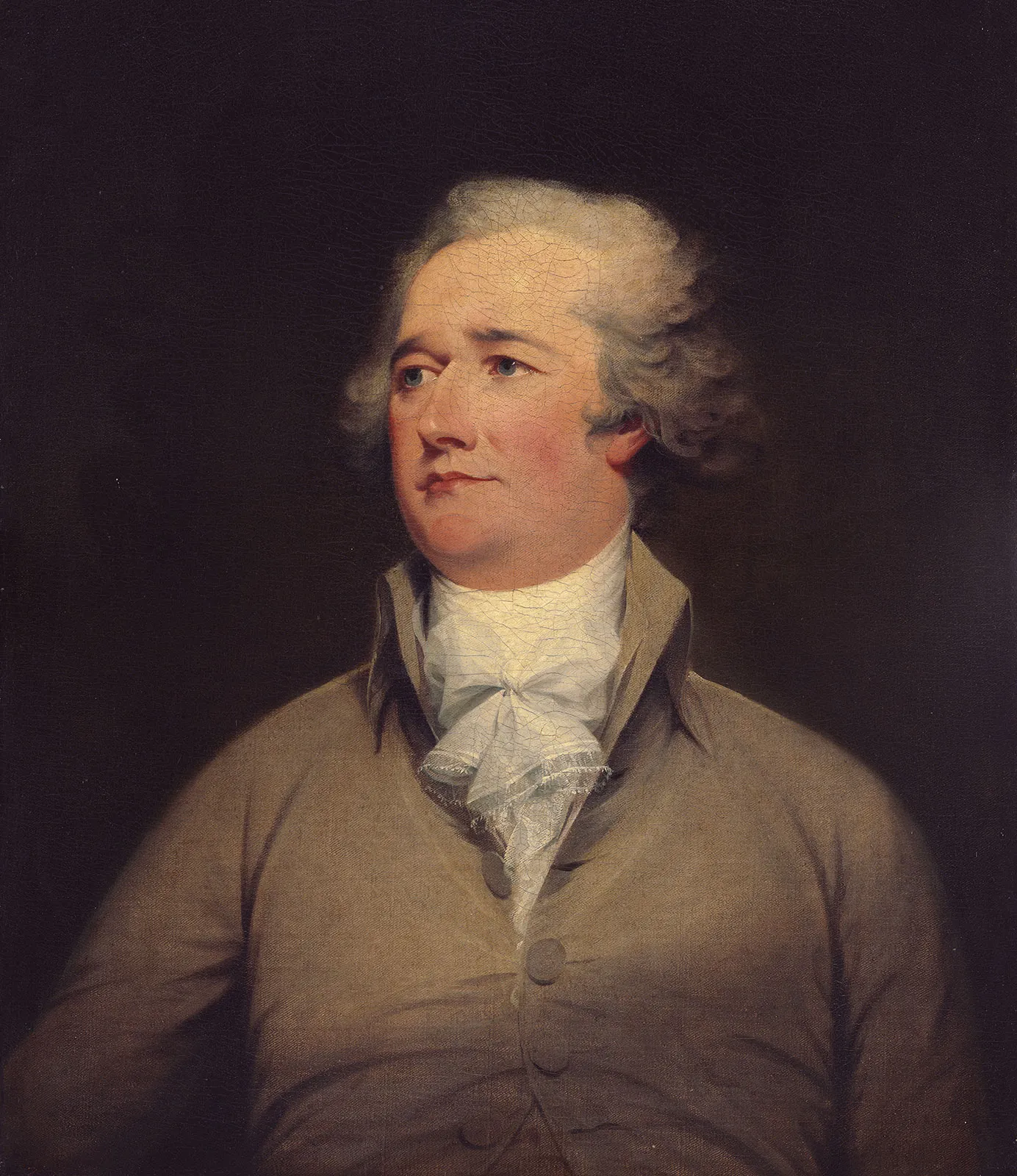
First of all, it seems clear that Alexander Hamilton was a true genius and, apart from some notable but infrequent lapses during his heyday, generally a man of uncommon moral fiber and noble principles. I think he has been under-appreciated in the teaching of American history, or at least in the version of American history that I was taught and that I know to be taught in much of the American South. I imagine that this is partly a function of his enemies outliving him and rising to the heights of power after his death. I do remember when I learned about him back in middle school. I remember thinking similar thoughts then. That it seemed to me that his impact on the founding of our nation was among the most important and that I was surprised that he was not depicted more prominently. However, I also wonder if under-appreciation for Hamilton is to some extent a result of his opposition to Jefferson, Madison, and the descendant political faction that has maintained a powerful role in American society all the way to today’s Republican Party, and that has influenced the way that our history has been written.
That said, the first topic I sat down to write about today is the parallels between Thomas Jefferson’s Republican Party and the one we have today. I was fascinated to learn that Jefferson and Madison seem to have also adopted a strategy of distributing misinformation, logically dubious and often unfair claims in order to achieve their goals. Examples include:
- Consistently reinforcing statements that Hamilton was a “monarchist” who was part of a secret cabal to overthrow the new US government and replace it with a monarchy. They clearly must have known that wasn’t actually true given how well they knew Hamilton and how intelligent they clearly were. On their intelligence, I’ll take it for granted that James Madison, for example, was also a man of uncommon intelligence given the fact that he is the foremost architect of the Constitution.
- Downplaying Hamilton’s bout with Yellow Fever and accusing him of faking it when he just had a common cold. And questioning his bravery even though they knew his reputation in the Revolutionary War.
- They also frequently engaged with or employed morally dubious characters to do their dirty work. Jefferson’s hiring of Phillip Freneau or his meetings with questionable characters in order to dig up dirt on Hamilton remind me somewhat of Trump’s use of Roger Stone or Alex Jones.
Chernow also recounts examples of Jefferson’s hypocrisy that also strikes me as a parallel to examples I see in today’s Republican Party. Jefferson had no reservations about accusing Hamilton of cowardice even though he didn’t fight in the revolution and demonstrated cowardice when serving as governor of VA. I’m reminded of the recent notable example of Trump disparaging John McCain, despite having avoided serving in the military by manufacturing a case of “bone spurs”. It pains me to learn these things about Jefferson. As a Virginian and as an alum of the University of Virginia (“Mr. Jefferson’s University”), I’ve always idolized him as the writer of the Declaration of Independence, a founding father, a statesman and a polymath. All of those things are true. However, I hated to learn that Jefferson’s behavior during his tenure as Secretary of State sometimes bordered on treason. For example, his clandestine discussions with the French emissary, Edmond-Charles Genêt after the French Revolution, in which he undermined George Washington and colluded with the emissary to help achieve France’s goals despite the fact that Washington and Hamilton would oppose them. This story bears similarities to treasonous actions of several members of Trump’s administration or those of Nixon when he went around LBJ to communicate with the South Vietnamese government while he was running for president.
Another parallel is the fervent belief that many of the Republican-identifying populace has in the fact that the Federalist or Democratic parties were going to doom America. I do believe that many of the Republican “Trumpers” I know today do truly believe that the opposition will “ruin America”, even though they often aren’t actually able to articulate what that would even mean or look like. In my opinion, this was much more understandable for the early Republicans. The “American Experiment” was by no means sure to succeed in the early days. They were also venturing through relatively uncharted waters given that many aspects of the American system were completely novel, the country had many notable weaknesses and there weren’t other variants of western democracies to compare and contrast against. I also am inclined to believe that early Republican leaders like Madison and Jefferson also most likely truly believed that the objectives of Hamilton and the Federalists were a real threat to America and that their opposition to them was in the best interests of the nation. I do not think that is the case in today’s Republican Party. As I’ll explain later in this essay, I think many of the leaders of the Republican Party have entirely different and mostly selfish motives that they hide behind claims that they are trying to stop Democrats from ruining the country.
I previously considered listing the early Republican leaders’ respect for decorum, chivalry, and respect as a contrast to today’s republican leaders. However, upon further reflection I’ve decided that I see parallels in addition to differences in that regard. They certainly did speak and write more eloquently and they took care to publicly present themselves as honorable and respectful. Jefferson took great care to use proxies to publish his disparagement of Hamilton and Madison used a pen name when doing so. Contemporary Republican leaders like Trump, Lindsey Graham, or Sarah Palin, on the other hand, have no reservations about publicly disparaging their opponents both on the merits of their ideas and with typically false representations of their character or motives. However, the similarity I see is in a willingness to stoop to playing dirty, using misinformation, or suspending logic in their arguments. Jefferson’s Republicans may have disguised it better behind eloquence, chivalry or proxies, but the theme appears nonetheless.
On the other hand, there are also certainly clear contrasts between the early Republican leaders and that of today. I do think is worthwhile to recognize some here. The first, and perhaps most obvious, difference is that the early Republican leaders like Madison and Jefferson were truly brilliant. They were learned, well read and did a great deal to promote education and learning in the early days of the nation. Madison, for example, founded James Madison University, which is located just over the Blue Ridge Mountains from the University of Virginia. Both were eloquent and brilliant. Jefferson was a polymath who was a self taught architect and inventor. Madison was the primary architect of the Constitution. Their uncommon intelligence cannot be in doubt.
I also strongly believe that it’s important to appreciate the distinction between thematic similarities and the proportionality or degree to which a theme was perpetrated. For example, kicking someone in the knee and shooting someone in the chest may both be examples of trying to injure an adversary, but they are vastly different in significance and their moral implications. With that in mind, I think it’s worth pointing out that there is generally a wide disparity in the degree to which to which Jeffersonian republicans and Trump era Republicans perpetrate the behaviors noted above as common themes. For example, while I think that it was technically treasonous for Jefferson to undermine Washington in his private meetings with Genet, I think it’s important to note that those actions were not in the same league of treason as Trump’s efforts to overthrow our Democracy on January 6th, 2021.
In summary, I’d like to state emphatically my opinion that, when it comes to the merits of their character, accomplishments, intelligence, and their contributions to the founding of our nation, they are, in my opinion, vastly different from the likes of Trump, Sarah Palin, Mitch McConnell, Lindsey Graham, Newt Gingrich, or Kevin McCarthy. I have found it thought provoking to analyze the commonalities between the early right-wing faction and today’s in order to better understand the true nature of and motivations of the right,
As mentioned at the outset of this essay, I’ve been thinking for a while now about whether I could write an essay that managed to provide a simplified characterization of the Democratic and Republican parties. From my own experience, I’ve seen how hard it can be to see through the external noise and arrive at your own judgements. In fact, it took me until my mid-20s or even 30s to finally develop my own truly clear opinions about the Republican Party. Previously they had always been influenced at all levels by the way I was taught American history and by the views of my parents and grandparents. It seems to me that a lot of Americans struggle to see the true nature of the two parties as well. I think that is due to a few reasons:
- It’s difficult to see through the political slogans, propaganda and hype. This is understandable, as the political narratives and marketing are explicitly designed for that purpose. For example, Republicans labeling their abortion stance as “Pro Life”, gives a member of the opposite side the challenge of establishing that they are not “pro death” in addition to or before arguing the merits of their views on abortion, which is a much more nuanced and complicated topic than their black and white analogy to life or death would imply.
- The system itself gives a certain amount of gravity and respect to the either party on the basis of tradition. The need for decorum and some degree of mutual respect in order for the system to function well also skews the left into having to perhaps demonstrate more respect for republican opponents than they deserve.
- I am not a psychologist, but I tend to observe that we as humans have a cognitive deficiency when it comes to recognizing, remembering, and accounting for proportionality in our minds. For example, you might see a contemporary Republican make an argument like, “You say that Democrats are honest and Trump is lying. Well, what about when Clinton lied about Monica Lewinsky? There are liars on both sides so why should I trust what Biden or Obama says is true?”
Over the last eight years or so, I’ve managed to sort through those fingerprints of propaganda and my childhood education on my own conscious and subconscious feelings about our history and politics. I’ve increasingly found myself having moments of clarity during which I found myself thinking “wait a minute? Am I the only one who really sees what the modern Republican ideology really is at its most basic level?!” It will of course be necessary to justify my opinions at length and I intend to do so, but I’ll start by stating it plainly that I think the true core motivation for aligning with Republican ideology among the general populace are fear, a generally pessimistic outlook on humanity, and a selfish desire to preserve and accumulate personal wealth. This leaves that group of people vulnerable to leaders who are willing to exploit those motivations to achieve their primary motivation: power. Another important variable is education and intelligence. It seems to be that the more enlightened a citizen is, the more likely they are to move to the political left. This can be offset in some cases if republican leaders can sufficiently exploit their fear or desire to preserve wealth in order to overcome the leftward pull that comes with education and logic.
It seems to me that the Republican or Conservative party in America is set up to favor the wealthy and selfish. The reality is that most of the people in Trump’s base would be better off voting for Democrats. They would benefit from universal healthcare, student loan forgiveness, regulation on financial markets and big banks, and definitely from taxes on the wealthy to redistribute wealth back down to poor farmers, coal miners, and the middle class. But the Republican Party has done a masterful job of marketing and has exhibited a talent for manipulating weaknesses in the human psyche. For example, they make a big deal out of gun rights. If they can make that a big enough topic, they can get voters to align with the party of not taxing the uber rich, even if that disadvantages those less wealthy gun owning voters. Or Trump and others playing on the Christian vote. If you can get your party associated with “not murdering babies”, you can get people to overlook the fact that you also want to deregulate big industry so you can get away with dumping pollutants into our waterways.
To end this essay on a lighter note, I will share that another take-away I’ve had from Chernow’s book is that I really wish I could meet Alexander Hamilton. He’s someone I would greatly like to have intellectual discussions with, to learn from, and likely would enjoy having as a friend.